
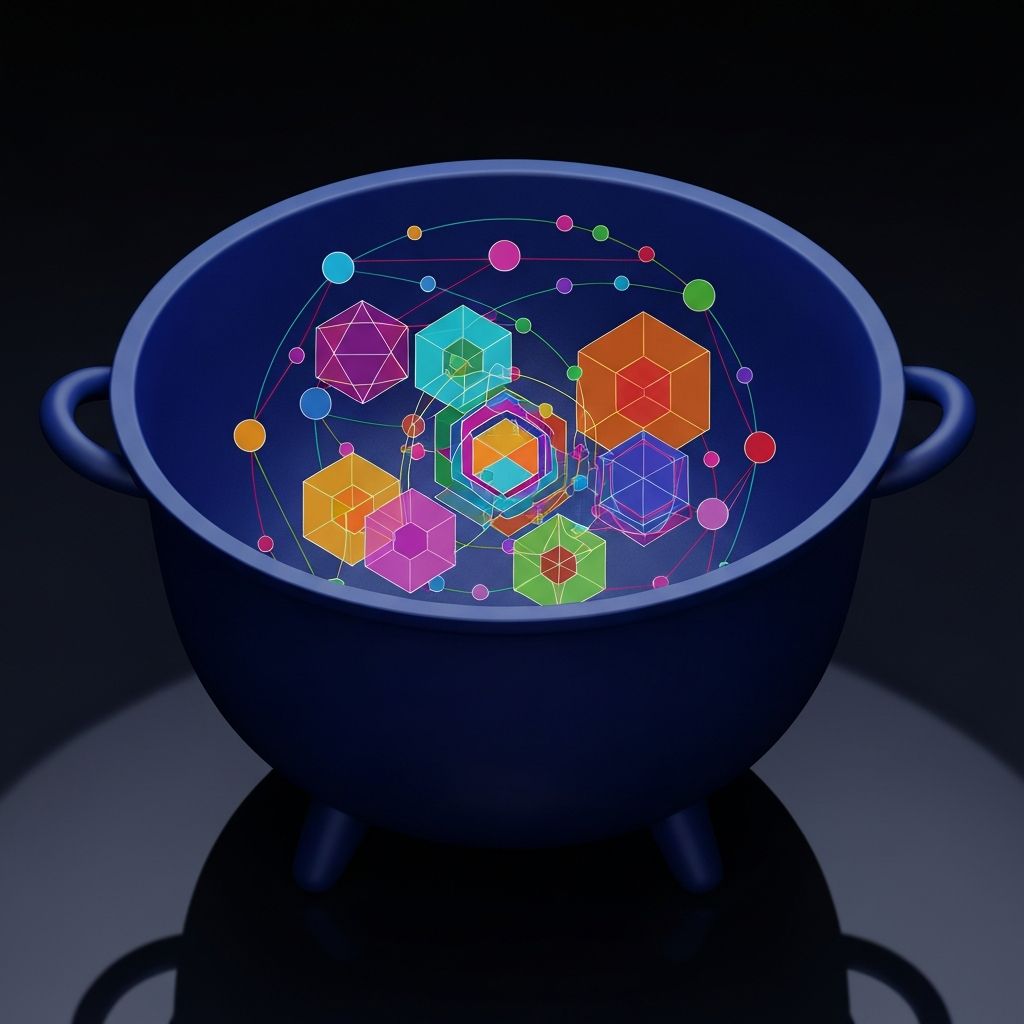
An in-depth exploration of the TEN² framework's 10-state quantum model and how deterministic approaches enhance system reliability.
Determinism in Quantum Computing
The TEN² framework bridges classical determinism with quantum computing by employing a 10-state model that maintains predictability while harnessing quantum advantages.
The 10-State Model
Unlike traditional quantum systems with infinite superposition states, TEN²'s discrete 10-state architecture provides bounded complexity and predictable outcomes—ideal for critical applications.
Reliability and Reproducibility
Deterministic systems can be replayed and debugged. This makes TEN² suitable for applications where reproducibility and auditability are essential: financial systems, healthcare, critical infrastructure.
Integration with Classical Systems
TEN²'s architecture seamlessly integrates with classical computing infrastructure, enabling hybrid approaches that maximize both quantum and classical benefits.
Future Applications
Organizations seeking quantum advantages without sacrificing reliability should explore TEN²-based approaches. The framework represents the future of practical quantum computing.
Implementation Considerations
Adopting TEN² requires retraining teams on deterministic thinking and new development paradigms. However, the benefits—reduced debugging time, predictable performance, and audit trails—make the transition worthwhile for enterprises prioritizing system reliability.
Comparing to Traditional Quantum
While traditional quantum systems offer greater theoretical computational power, TEN² prioritizes practical enterprise deployment. For business-critical applications, this trade-off between raw power and reliability often favors deterministic approaches.