
Pioneering the Future of Computation
At Lumen Helix Solutions, our R&D division explores the frontiers of quantum-inspired computing, reversible architectures, and advanced AI systems.
We bridge theoretical mathematics with practical implementation to create breakthrough solutions that advance the field.
Core Research Areas
Our interdisciplinary approach combines pure mathematics, quantum theory, and practical software engineering to solve tomorrow's computational challenges.
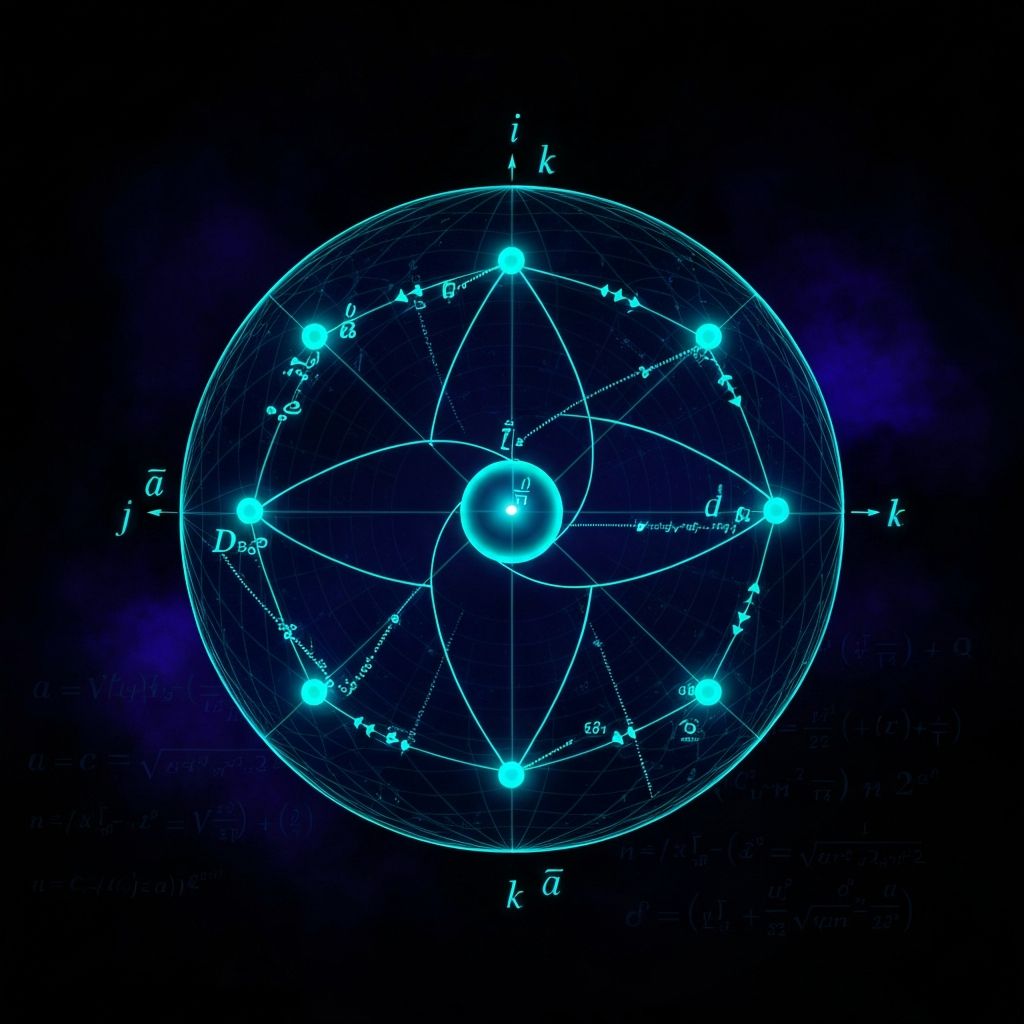
Exploring quaternionic algebras as a unifying framework for NUMO Field, Cauldron, and RUBIC systems. Our research demonstrates how quaternions provide associative, numerically stable representations for discrete symmetries and reversible operations.
- D8 × Z2 symmetry representation using unit quaternions
- Norm-preserving transformations for reversible computing
- OS-level optimization via symmetry-aware scheduling
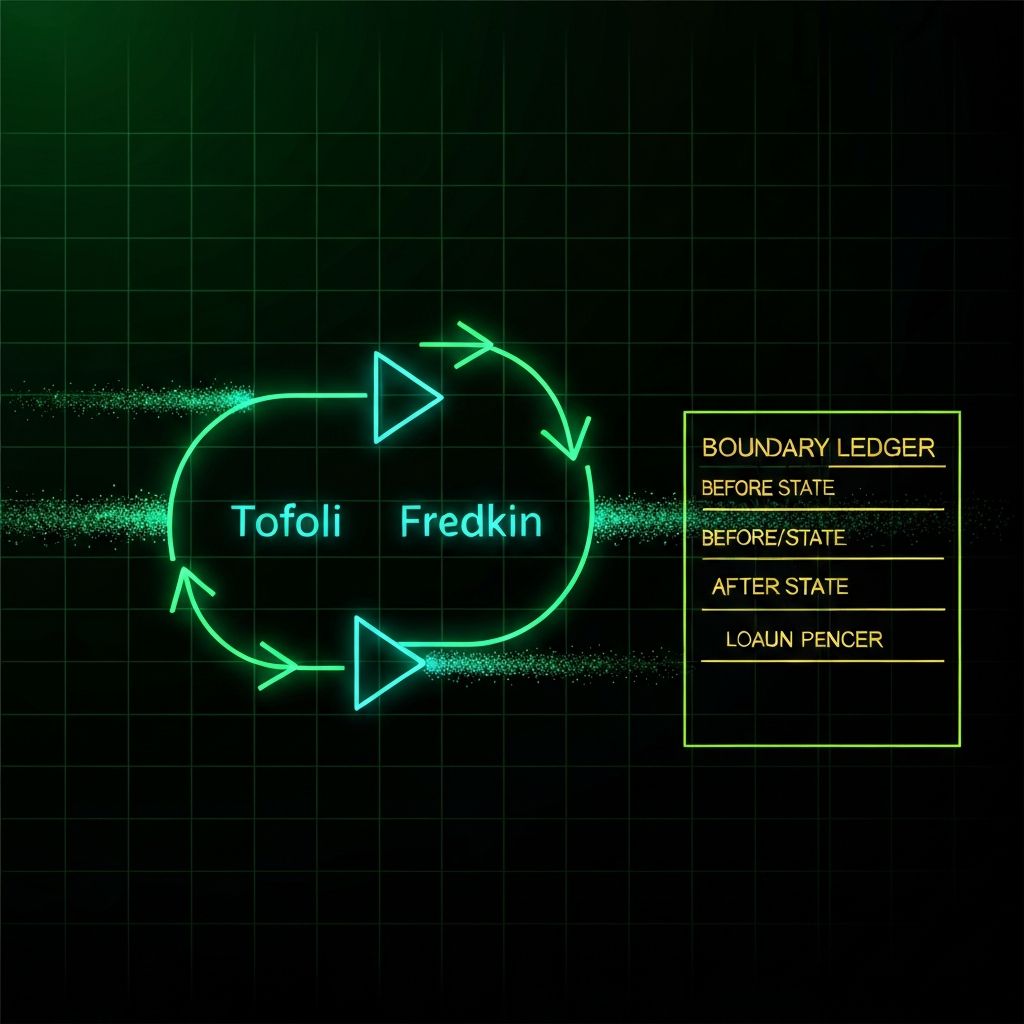
The Reversible Unified Boundary-Integrated Core (RUBIC) system implements time-reversible computation where every operation is invertible, minimizing energy dissipation and enabling perfect state recovery.
- Reversible Processing Units (RPUs) with invertible logic gates
- Boundary-integrated architecture eliminating rigid interfaces
- Minimal-history state registry for efficient rollback
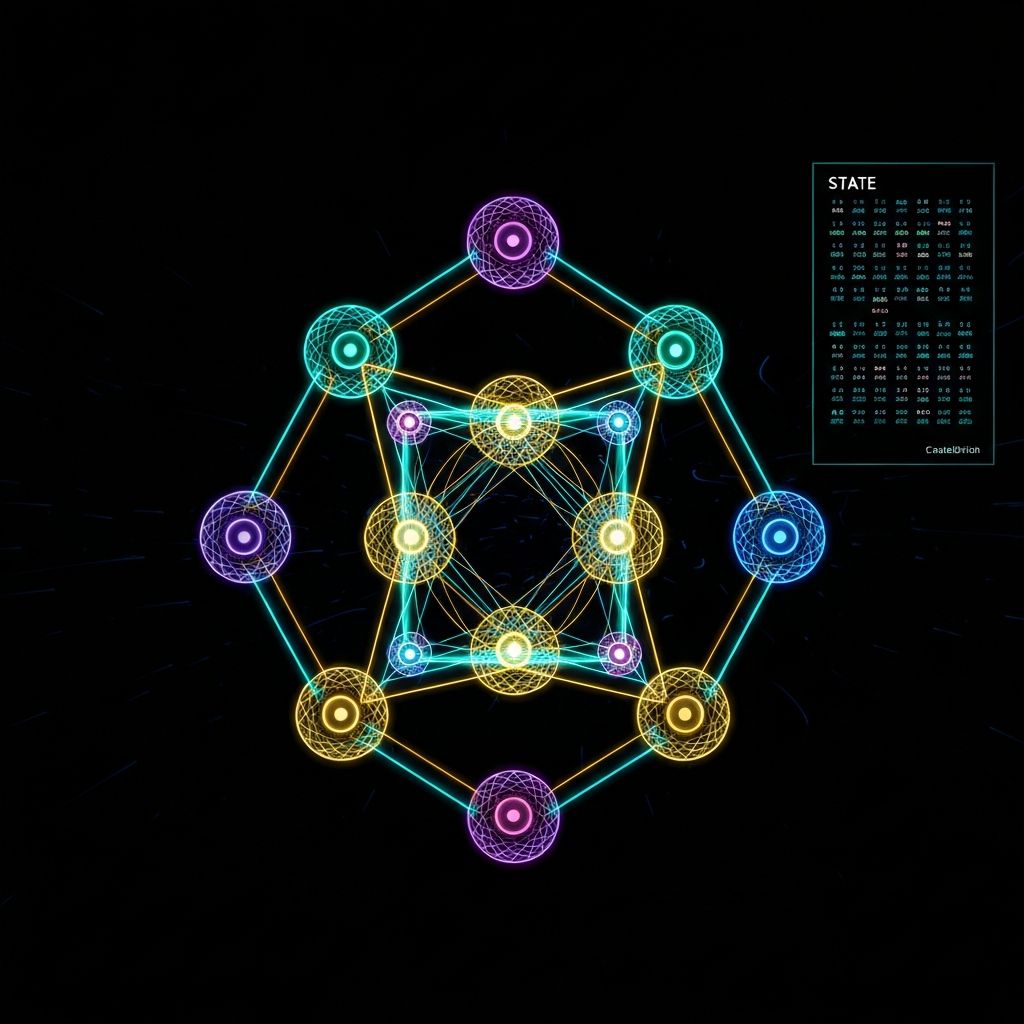
A minimal exactly-solvable quantum system with D8 × Z2 symmetry, decomposing into a 2-state qubit and an 8-state dihedral ring. The Cauldron demonstrates complete algebraic structure with D8 × Z2 symmetry, Clifford algebra Cl(0,8) embedding, and connections to SO(8) triality and E8 root lattice.
- Four canonical delta-pairs with octagonal reflection symmetry
- SO(8) triality and minimal nontrivial spinor representation
- Five-suit symbolic system mapping to elemental oppositions
Developing advanced AI systems that integrate with our computational frameworks, from large language model applications to quantum-inspired neural architectures and symbolic AI reasoning systems.
- LLM-powered analysis and content generation systems
- Symbolic reasoning integrated with neural networks
- AI-assisted software development and optimization tools
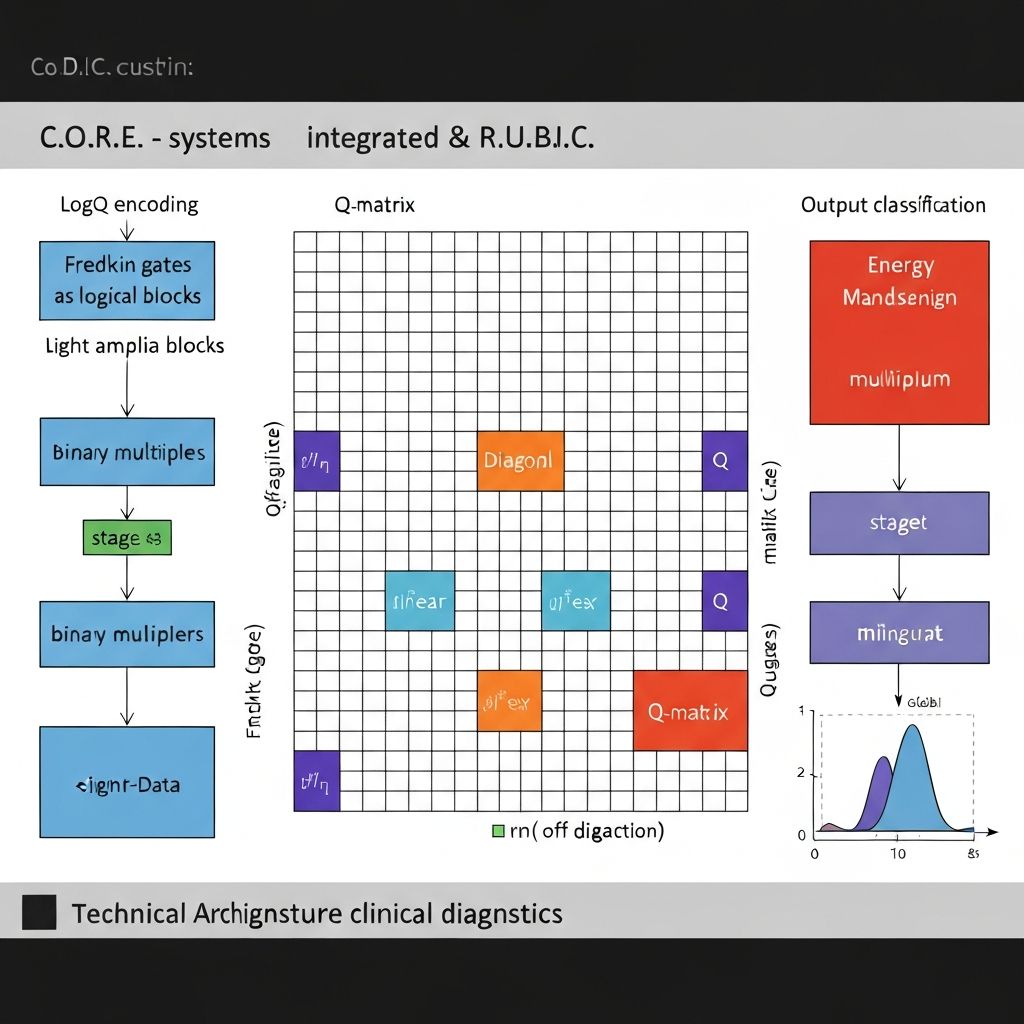
The C.O.R.E. and R.U.B.I.C. systems applied to clinical oncology provide interpretable, mathematically-grounded diagnostic algorithms for precision medicine. By mapping patient profiles to quantum-inspired energy landscapes, we achieve 30x performance improvements over classical approaches on large-scale biomarker datasets.
- LogQ Encoding: logarithmic qubit scaling for high-dimensional patient data
- QUBO Formulation: binary optimization for feature selection and pathology classification
- Tensor Network Solvers: DMRG approximation for entanglement-aware diagnostics
Ready to implement quantum-optimized solutions for your organization?
Explore Quantum Optimized ServicesActive Research Projects
From theoretical foundations to production-ready implementations
Production implementation of NUMO Field mathematics in an interactive oracle card platform, deployed at numoracle.com with over 1,000 active users.
View ProjecteBPF-based instrumentation suite implementing symmetry-aware scheduling and memory management using quaternionic state encodings for Red Hat ecosystem.
Research Publications
Peer-reviewed papers and technical documentation
The GnBox: A Verified Reversible Substitution Primitive with Perfect Human-in-the-Loop Auditability for the 32.C.U.B.I.T. Computational Field
Christopher Gordon Phillips, Lumen Helix Solutions
Presents the GnBox — a dynamic, Golay-fibered reversible substitution primitive embedded in the depth-1 macro-cube of the 32.C.U.B.I.T. v7.7 architecture. Each substitution is realized via the forward rotor ρ(x) = 5x (mod 32) with exact inverse ρ⁻¹(x) = 13x (mod 32), verified across 10 disjoint orbits. Golay damping enforces membership in the extended binary Golay code G₂₄ with <2⁻¹² violation probability. 100% roundtrip fidelity verified across 10,000 trials. Every substitution manifests as a visible 90° slice twist in the OmniDirectional S-Box terminal, enabling human-auditable rollback and tamper-evident ledger generation.
Minimal Faithful Permutation Representations with Cyclic Conjugation of Disjoint Transpositions
Christopher Gordon Phillips, Lumen Helix Solutions
Studies faithful permutation representations of D₂ₙ × Z₂ subject to a cyclic conjugation condition on disjoint transpositions whose product lies in the center. Exhaustive GAP enumeration over S_n for n ≤ 10 establishes three classification results: (1) D₈ × Z₂ (the Cauldron module) has a unique faithful representation occurring only at n = 10; (2) the minimal faithful D₆ × Z₂ representation admitting the disjoint-transposition conjugation property (the Seed module) occurs uniquely at n = 8; (3) internal triality is universal for D₆ × Z₂ while the external property is strictly stronger. Extensions to the 20-state Flower of Life system and the 3D octahedral case are proven, with a negative result for the cuboctahedron.
A Quantum-Inspired Framework for Breast Cancer Diagnosis: The C.O.R.E. and R.U.B.I.C. Systems
Christopher Gordon Phillips, Lumen Helix Solutions
Introduces the Compressed Optimization for Robust Encoding (C.O.R.E.) and Reversible Unified Boundary-Integrated Constraints (R.U.B.I.C.) systems for precision oncology diagnostics. Demonstrates how QUBO formulation maps patient biomarkers to energy landscapes, achieving 30x performance improvements over classical approaches. Includes LogQ encoding for logarithmic qubit scaling, tensor network solvers with 0.96-0.99 approximation ratios, and clinical constraint enforcement through penalty functions and logical gates.
Observer-Relative Causality and Coupled-Cone Distinguishers in Elementary Cellular Automata
Christopher Gordon Phillips, Lumen Helix Solutions
Introduces the Cone-Nonlocality Test (CNLT), an observer-relative causal invariant that classifies discrete dynamical systems by their bounded causal cone structure. Demonstrates that coupled-cone observers reveal nonlocal correlations in Rule 30 that single observers cannot detect, establishing an observer hierarchy that separates reversible, linear, and chaotic dynamics through DFA minimization.
Exact Dyadic Noncommutative Lift of Collatz-Like Dynamics with Bijective Branch-Bit Extension
Christopher Gordon Phillips, Lumen Helix Solutions
Formalizes an exact arithmetic dynamical system on dyadic Gaussian rationals that lifts parity-controlled Collatz-like evolution into noncommutative complex affine maps. Demonstrates non-injectivity of the base map and constructs a minimal bijective extension via a single branch bit, providing exact reproducible computation with certified bounds and a central conjecture on real-axis non-return dynamics.
Quaternionic Unification Across Cauldron, CORE/NUMO, and RUBIC Systems
Christopher Gordon Phillips (Raziel Ali) and Astra, Lumen Helix Solutions
Proposes quaternionic algebra as a practical middle layer unifying the Cauldron's D8 × Z2 quantum symmetry, CORE/NUMO's canonical delta-pair reflections, and RUBIC's reversible boundary-integrated architecture. Outlines OS-level implementation targeting Red Hat ecosystem via eBPF and kernel modules for symmetry-aware scheduling and performance optimization.
The Quantum Divination System: NUMO Oracle Platform
Christopher Gordon Phillips, Lumen Helix Solutions
Details the deployment and features of the NUMO Oracle Platform, a commercial quantum divination system with over 1,000 active users. Highlights the platform's interactive capabilities and applications in various fields.
The Cauldron: A Minimal Exactly-Solvable 10-State Quantum Universe with D8 × Z2 Symmetry
Lumen Helix Solutions Research Division
Presents the Cauldron model as the cleanest known finite-dimensional example of exact dual-aspect monism. Demonstrates complete algebraic structure with D8 × Z2 symmetry, Clifford algebra Cl(0,8) embedding, and connections to SO(8) triality and E8 root lattice.
Glossary and Analysis of NUMO Field, Cauldron, and RUBIC Frameworks
Lumen Helix Solutions Research Team
Comprehensive glossary defining technical terms, symbolic representations, and mathematical structures across the NUMO Field ecosystem. Includes detailed explanations of delta-pairs, octagonal symmetry, and reversible computation principles.